

Salomon Law Corp

Areas of Practice

How do I create a Parenting Plan?

April 3rd, 2009

Many parents do not know where to start in addressing what custody and visitation should look like.  Having ideas and several options may help you to create a plan tailored to best fit your child(ren).  The Los Angeles Superior Court has provided a series of Parenting Plan brochures that will help many separated and divorced parents.  There are currently seven brochures that can be viewed and printed from the LA Superior Court website.  Five of the brochures provide sample schedules depending on the developmental stage of your child.  Another brochure addresses the Holiday and Vacation options.  Check out these brochures at the link provided herein.  LA Superior Court Parenting Plan Brochures.

How to Explain Divorce to Your Children

March 23rd, 2009

Many books have been written about children caught in the middle of their parents divorce and the effect it has on the children.  In a recent article written by M. Nueman, he explains how to talk to your child(ren) about divorce based upon the child’s age.  Click on the link for the article entitled, “Your Child is Not a Statistic.”

Behind Closed Doors

October 30th, 2008

Behind Closed Doors

Behind closed doors you never know

The “private” lives that friends don’t show

It happens in the best of places

And shows up first on children’s faces

First, the look of their sad eyes

Then their voice complete with sighs

They don’t talk much nor do they play

You ask them why, but they won’t say


Their bear the weight of parents’ sin

Of daily abuse and anger turned in

They have that look that says, Dont Touch

I’ve had enough, in fact too much

They fight with all to show their power

But while at home they sit and cower

To wait upon their nightly whip

Sometimes from hands, sometimes from lips

It matters not where comes the pain

From stinging slaps or words that shame

‘Cause as they grow in size and age

Their minds still fill with thoughts of rage

And when they wed and parents are

They still bear wounds and have deep scars

That bind them in so many ways

To their past lives which they replay

And on and on the cycle goes

Unless it stops and we can show

That “private” lives in “private” places

Ruin future lives in future spaces

So be not silent, don’t turn in fear

Reach for their hand, give them your ear

With gifts of love, touch their young heart

And the cycle of hate, you’ll surely part

(C) JayGee01

Do I Need a Forensic Accountant?

September 29th, 2008

In simple terms, a forensic accountant is an expert who assists the Judicial Officer and legal counsel in understanding specific financial issues.  The accountant is skilled in analyzing financial data and related transactions and putting them into context for the case at hand.

The forensic accountant can uncover hidden income/assets, discover fraud, understanding assets and performing an analysis of various documents.

The accountant will usually begin by looking at he couple’s tax returns and understanding how income and expenses are being distributed/allocated.  The accountant will want to see bank account statements, credit card statements and canceled checks.

The accountant will usually want documents from several years back.

Once the accountant has reviewed and analyzed the community, he or she will prepare a report.  The expert may also provide expert testimony and/or give testimony at a deposition.

The forensic accountant can provide a vast array of significant range and breadth of capabilities in your family law matter.  The need for a forensic accountant must be carefully thought through to be certain that it is necessary, taking into account the issues and complexities of the case.  Moreover, whether the likelihood of achieving worthwhile results for the client most definitely must be considered.

Can I Home School My Child?

September 29th, 2008


California Court Considers Whether Parents Have the Right to Home School Their Children and It’s Potential Impact on Family Law


More parents are opting to home school their children; an estimated 166,000 children are home schooled in California. There are many reasons why parents elect to home school children: some parents feel that their child will learn better in a one-on-one environment; some parents are concerned that their child’s needs or family values are not adequately addressed in public or private schools, and still others are concerned about their child being exposed to a potentially stressful situation including bullying or teasing. As a parent, do you have the constitutional right to home school your children?  The California Court of Appeal, Second District recently considered this very issue.


The Court’s decision most likely will have an interesting impact on Family Law in the realm of custody/visitation and child/spousal support.  The issue will potentially arise when parties go their separate ways with minor children involved, whether via divorce proceedings or the dissolution of a relationship (Paternity).  If one parent has historically home schooled the couple’s children prior to divorce, will the Family Law Court still take into account the status quo even if the Court holds that a parent does not have a right to home school their children.  Does this mean that the minor children must be enrolled in public/private school?  What if several years after the divorce, Mom decides it is in the children’s best interest to home school the couple’s three (3) minor children, and Dad does not agree?  If the Court holds that a parent does have a right to home school their children, it is most likely that Mom will be able to do such as long as she can show it is in the best interest of the children.  If a parent does not have that right, it is more likely that Mom will not be able to home school the children.  The Court’s decision will have an effect on determining what is in the “best interest” of the child.  The argument for home schooling is weakened if the Court determines that parents do not have the right to do so.


The Court’s decision can also impact support issues.  If Mom is a stay-at-home caretaker and home schooling the children, her income is most likely going to be zero.  The California child and spousal support calculations take into account many different variables to determine the amount of support.  The most critical factors are each parties respective incomes and the time each parent spends with their children.  If Mom is allowed to stay at home to home school the children, the financial impact to Dad can be great.  I can foresee many practitioners making the argument that if Mom chooses to stay home to home school the children, she should at least be imputed the income of a teacher, (approximately $35,000 to $45,000 per year).  This would help to alleviate the financial burden on the paying spouse.  On the flip side, Mom’s counsel will argue that the benefit to the children, the amount of expenses saved by home schooling the children, far surpasses imputing income to Mom.  This decision will expand the practitioner’s ability to present effective arguments and will open a new field of case law in the Family Law context.


Plato observed that, “The direction in which education starts a man will determine his future life.”  With that said, the impact of the outcome of the Court’s decision will have loud resounding effects. 


The In re Rachel L Case

On February 28, 2008, the California Court of Appeal, Second District ruled in the case of In re Rachel L (B192878) that parents do not have a constitutional right to home school their children. The Court of Appeal remanded the case back to the Dependency Court, instructing it to order the parents, unless there is a legal ground not to do so, to (1) enroll their children in a public full-time day school, or a legally qualified private full-time day school and (2) see to it that the children receive their education in such school.


The case was initially filed in Dependency Court by the Department of Children and Family Services after the eldest child reported that their father was emotionally and physically mistreating them. The younger two children were assigned minor’s counsel who asked the dependency court to order the parents to enroll the children in a public or private school. Although the dependency court acknowledged that the children’s home schooling was “meager,” “lousy,” and “bad,” it denied minor counsel’s request and ruled that the parents had a constitutional right to home school their children. Minor’s counsel then filed a petition for extraordinary writ in the Second District of the California Court of Appeal, claiming that the dependency court’s refusal to order attendance in a public or private school was an abuse of discretion. The Court of Appeal held that the dependency court had made an error at law in ruling that the parents had a constitutional right to home school their children.


California Law

Under the California Education Code § 48220 et seq., enrollment and attendance at a full-time public day school are required for minor children unless one of the following applies:

  • the child is enrolled in a private full-time day school and actually attends that private school;
  • the child is tutored by a person holding a valid state teaching credential for the grade being taught; or
  • another statutory exemption applies, such as the minor holds a work permit to work in the entertainment industry.


In the case of Rachel L., the parents had enrolled the children at a private school, but the children did not actually attend the school. Furthermore, the children’s mother was conducting the home schooling, but she did not have a valid state teaching credential.


Constitutional Law

The parents argued that California’s compulsory public school education law was unconstitutional. Specifically, they claimed that the U.S. Constitution granted parents the right to choose their children’s education. The California Court of Appeal disagreed with the parents. The court pointed out that the provisions of the California Education Code in question were held constitutional by the United States Supreme Court in People v. Turner (1953) 121 Cal.App.2d Supp. 861, 865 et seq., (“Turner”). The Turner Court reasoned that it was reasonable to require a credential for a home school tutor because of the extreme difficulty of supervising every child being home schooled. On the other hand, full-time private school teachers need not be credentialed because the private school would supervise the teachers and “would have an interest in maintaining the required standard of instruction…so that the schools would continue to qualify for the private full-time day school exemption.” (Turner at 867-868).


Disposition of the Case

The California Court of Appeal granted the writ and remanded the case back to the Dependency Court. Parents of home schooled children and home schooling advocates were alarmed by the ruling and the ruling sent immediate shock waves throughout the nation; even states as far away as Georgia have raised concerns about how this ruling might impact home schooling in their state.


Rehearing Set for June

The California Court of Appeal has agreed to reconsider the case. New arguments have been set for June of 2008. In granting the rehearing, the prior order of the Court of Appeal is vacated, which means it is set aside or annulled. Usually a rehearing is granted to address minor revisions. In this case, however, it appears that it may relate to the major holding of the case. The court has asked for written arguments from several parties, including state and local officials as well as the teachers unions. This suggests that the court will completely re-examine the underlying case, Jonathan L. v. Superior Court of Los Angeles, B192878. It appears the court intends for the case to be fully argued.


With a rehearing in June and the possibility of this issue eventually being heard by the California Supreme Court, a final resolution can be months or even years away. With so many people affected by the decision, this case will be one to follow.


Thurgood Marshall opined that “None of us got where we are solely by pulling ourselves up by our bootstraps. We got here because somebody (a parent, a teacher, an Ivy League crony or a few nuns) bent down and helped us pick up our boots.”


Whether our children are able to be taught by their parents in their homes or by credentialed school teachers in public/private school settings, if the teacher is teaching from the heart and the student learns to see the vitality in themselves, the job of education has been done.


To Reconcile or Not.

November 29th, 2007

The holidays are tough especially in the midst of a divorce. Thoughts of sugar plums and reconciliation will dance in your head. However, before you dismiss your pending divorce, make sure you take a step back and really consider whether you are caught up in “the holiday cheer and fun.”

Many couples choose reconciliation and it works BUT . . . the reasons for the underlying dissolution (divorce) action must be considered. If domestic violence, drug or alcohol abuse or infidelity play a role in your reasons for seeking a divorce, then serious thought should be considered before you request to dismiss your divorce. Remember that certain issues are not cured overnight. Spouses who are emotionally and physically abusive need serious help and intervention. The same holds true for those who are addicted to drugs or alcohol. My theory on cheating, is that it is a state of mind. It is a condition that I consider a disease . . . once a cheater, always a cheater.

If you have young children, you owe it to them to give them the best loving and peaceful household as you possibly can. This may mean that you hold fast and refuse mistreatment and chaos . . . even if that means a lonely holiday. As my Grandpa always told me, “You can do bad by yourself.”

Shattered Love, Broken Lives . . . Domestic Violence and Abuse

May 23rd, 2007

Decades and decades of research reveals that batters do not quit over time. Whether alcohol and drug abuse is a factor or not, domestic violence and abuse is a very serious problem . . . for both the victims and the abusers. There is some link between alcohol/drug abuse and domestic violence.

A recent study by the University of Massachusetts revealed that the vast majority of the abusers also engaged in other behaviors that resulted in multiple arrests over the decade for non-domestic violence crimes. While 60% were returned to court for abuse, 71% were rearrested for any crime.

Marriage was associated with reduced likelihood of new arrests for non-abuse crimes, but not new abuse. This suggests that marriage, at least for victims of intimate partner violence, is not “the safest place to be.”

The National Council’s Family Violence Department Web site contains copies of all state domestic violence laws. It can be found at http://www.ncifci.org/dept/fvd.

Establishing Paternity in California: Who is the Daddy?

May 23rd, 2007

Most people heard about Anna Nicole Smith’s ex-boyfriend, Larry Birkhead, filing suit for Paternity in Los Angeles Superior Court at the end of 2006, demanding that Smith return to the U.S. with newborn daughter, Dannielynn Hope and submit the baby to a paternity test.

“Establishing parentage” in California means saying who the legal parents of a child are if the parents were not married when the child was born. If the parents were married when the child was born, the law usually considers the husband to be the father.

If you are not married when the child is born, you can sign a Voluntary Declaration of Paternity before leaving the hospital (or after). When people who are not married can not agree about parentage, the court can order genetic testing.

California paternity law authorizes blood tests in cases where parentage is disputed. The mother, child, and alleged father will be required to submit to these blood tests. If a party refuses to submit to blood tests, then the court has the power to resolve the parentage issue against that party.

Generally, a child’s parentage must be established before child support or custody/visitation orders are put into place. You can ask the judge for child support or custody and visitation as part of a case that establishes the parentage of a child. If paternity is challenged by the father, temporary child support may be awarded while pending whether the alleged father is the actual father. If the DNA test is negative, the child support paid may be returned to the paying party under California Paternity Law.

Am I Entitled to My Divorced Spouse’s Social Security Benefits?

May 23rd, 2007

If your former spouse qualifies for social security benefits, you may apply for benefits when your former spouse reaches age 60, even if your former spouse has not applied for the benefit for himself or herself.

Ten years is the magic number. You must have been married to the worker for 10 years before the date the divorce became final. In addition, the spouse seeking the benefit cannot have remarried. It does not matter if the working spouse has remarried.

The Social Security Administration website has very useful information. You are entitled to your divorced spouse’s insurance benefits on the worker’s Social Security record if:

A. The Worker is entitled to retirement or disability insurance benefits;

B. You have filed an application for divorced spouse’s benefits;

C. You are not entitled to a retirement or disability insurance benefit based on a primary insurance amount which equals or exceeds one-half the worker’s primary insurance amount;

D. You are age 62 or over;

E. You are not married; and

F. You were married to the worker for 10 years before the date the divorce became final.

Can I Claim My Child(ren) On My Taxes? Depedency Exemption Entitlement

May 23rd, 2007

The Law is clear, the custodial parent is entitled to the dependency exemption and the child tax credit. The custodial parent may sign, or the court may require the custodial parent to sign IRS Form 8338. IRS Form 8338 will waive the custodial parent’s right to take the exemption so that the noncustodial parent may do so.

If there is split custody, rotating custody, or if there is no agreement which establishes who has custody, then “custody” will be deemed to be with the parent who, as between both parents, has the physical custody of the child for the greater portion of the calendar year.

If there is an exact equal timeshare between both parents, then pursuant to the “Working Families Tax Relief Act of 2004,” effective January 1, 2005, the parent who is entitled to the dependency exemption is the parent who has the highest adjustable gross income for the taxable year.

Enforcing Family Law Orders By Contempt in California

May 21st, 2007

In general, family law orders and judgments are enforceable by contempt. Disobedience of any lawful judgment, order or process of the court is a contempt of the authority of the court.

Support orders: Child, spousal and family support orders are based on an obligation arising out of marriage and parentage and are imposed by law. They are enforceable by contempt.

Child custody/visitation orders: The court may invoke its contempt power against a parent who unjustifiably interferes with the other parent’s court-ordered visitation rights or violates an injunction restraining relocation with the children.

Attorney Fees/Costs orders: Need-based attorney fees and costs are awardable by statute in marital proceedings. The award is based on a law-imposed obligation and is enforceable by contempt.

Community property division orders: A spouse who refuses to relinquish a specific item of property or to pay over a portion of a specific fund of money pursuant to a community property division order is subject to enforcement by contempt.

Restraining orders/Family Code protective orders: The court may invoke its contempt power to compel compliance with valid protective orders and restraining orders issued in a domestic relations proceeding.

Statute of Limitations: The contempt remedy for noncompliance with a court order made under the Family Code is subject to a statute of limitations. For an alleged failure to pay child, family or spousal support, the contempt action must be commenced no later than three years from the date the payment was due.

A contempt cause of action for nonpayment of support may be broken into separate ‘counts’ for each month payment was not made in full.

A contempt action to enforce any other order made under the Family Code must be brought within two years from the time the alleged contempt occurred.

Facts needed to prove contempt: The facts generally necessary to establish prima facie contempt of a family law order are: (1) rendition of a valid order; (2) the citee’s knowledge of the order and; (3) the citee’s willful disobedience of the order.

Punishment: Contempt punishments for a first time violation is county jail for up to 5 days or 120 hours of community service or pay a fine of $1000 for each count. For a second time violation, the person can be put in county jail for up to 5 days and do up to 120 hours of community service, and pay a fine of $1000 for each count. For a third and subsequent violation, the person can be put in county jail for up to 10 days and do up to 240 hours of community service and pay a find of $1000 for each count.

The Court can also order the person found in contempt to pay attorney fees and costs to the other person.

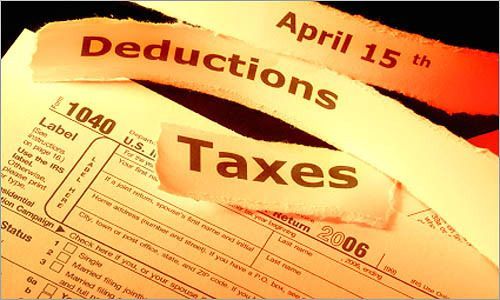
Tax Return Planning During the Separation Period

May 15th, 2007

Many couples going through divorce spend considerable time deciding whether to file married jointly or married filing separately.

Disadvantages of Separate Returns: Married couples who file jointly are taxed as if each spouse had exactly the same taxable income. Accordingly, substantial tax savings are realized by filing jointly.

Different Tax Rates on Separate Returns, Earnings Taxed Separately: If you are separated from your spouse but still legally married by the end of 2006, you must file separately unless you and your spouse agree to file a joint return or a court has entered a judgment of legal separation. A later obtained judgment or marital dissolution does not relate back to an earlier year in which you and your spouse were married.

You and your spouse will each be taxed on your respective earnings separately. But you will each have to allocate income, treating income earned before the date of separation as community property (taxable half to each) and income earned after the separation date as the earning spouse’s separate property. If all income is community income so that the income and deductions are divided equally among you and your spouse, the total tax on separate and joint returns will be the same.

Restrictions on Itemized Deductions and Child Care Credit: If you and your spouse file separate returns, you both must agree to itemize deductions. If not, then neither can. IRS Section 63(e)(1). No child credit may be claimed on a spouse’s separate return unless the other spouse was absent from the household during the last six months of the year. IRC Section 21(e)(4).

Allocation of Tax Liability: Separated spouses who are willing to file jointly should reach a clear agreement as to how the tax liability will be apportioned between them. A logical approach is to prorate the tax liability by using a ratio based on the parties’ separate incomes. In the alternative, spouses may choose to allocate liability based on what each would have paid if separate returns were filed.

Relief from tax liability: Generally, spouses who sign a joint return are each jointly and severally liable for the tax shown on that return, including any tax deficiencies, interest and penalties attributable to the other spouse. The liability exposure should be kept in mind when deciding whether to file jointly or separately.

Potential Joint Liability Relief: A spouse wrongfully exposed to joint liability for deficiencies, interest and penalties may have recourse under an indemnification agreement or under various code provisions. For example: (1) ‘Innocent Spouse’ relief from liability for tax deficiencies attributable to erroneous items of the other spouse (IRC Section 6015(b)); ‘Separate liability’ relief from liability for tax deficiencies (IRC Section 6015(c)); and Equitable relief from liability for tax deficiencies and underpayments (IRC Section 6015(f)).

Helpful assistance can also be found at the IRS Web Site http:/www.irs.gov.

CAN A CALIFORNIA CHILD SUPPORT ORDER BE MODIFIED?

May 10th, 2007

Child support orders are modifiable long after a judgment’s finality. Subject to certain limitations, child support orders are modifiable at any time as the court deems necessary.

The family law court has primary jurisdiction over modifications. Once a marital status/dissolution action has been filed, the family law court’s jurisdiction attaches. Disputes over the modification of child support should ordinarily be heard in the family law action in which the original support obligation was imposed. Many times, parents relocate to different states or countries and in that instance, there is a bases for shift in jurisdictional situs.

Reason for Modification: Generally, courts will not modify or revise a child support order unless there has been a ‘material change of circumstances.’ There are no rigid guidelines for determining when the circumstances have sufficiently changed to warrant a child support modification. The determination is made on a case-by-case basis and may turn on the facts particular to each individual case (such as ability to pay or need).

Ability to pay: A change in either parent’s financial position is not an automatic ground for modification. The Court will examine both parties’ circumstances and will evaluate the circumstances according to statutory factors set forth in the Family Code.

Parent’s increased wealth: The obligor parent’s enhanced wealth often itself will be grounds for increasing the child support level.

Earning Capacity vs. Actual Earnings: The parent’s actual earnings are not always the controlling question when calculating the obligor’s ability to pay. The Court has discretion to consider the earning capacity of a parent as opposed to the parent’s income, so long as it is in the best interests of the children.

Can both parents agree to modify support? The parents may agree as between themselves to increase court-ordered child support payments at any time and under any circumstances. The agreement should be reduced to a writing and signed by both parties.

Can my ex-spouse’s/new mate’s income be considered? Trial courts may not consider the amount of support the income of a parent’s subsequent spouse or nonmarital partner makes except in ‘extraordinary cases.’ For example, new mate income may be considered if child would otherwise suffer ‘extreme and severe’ hardship.

Bottom Line: Child support modification is determined on a case-by-case basis with the best interest of the minor child at the forefront.

CALIFORNIA SPOUSAL SUPPORT FAQ’S

May 8th, 2007

1. Is spousal support mandatory?

A spousal support award is not mandatory in divorce or legal separation cases in California.  Spousal support is often awarded at an Order to Show Cause on a temporary basis, where one spouse is earning significantly less than the other spouse or is unemployed.  The propriety of a California spousal support award is judged broadly by the parties’ “circumstances” in reference to the standard of living established during the marriage and their respective needs and ability to pay.

The Superior Courts of Los Angeles and Orange Counties have adopted a spousal support guideline for use in setting temporary spousal support.  This guideline provides that the obligor’s spousal support is to be 40% of net monthly income, reduced by one-half of the recipient spouse’s net monthly income.  If child support is being paid, the guideline level child support is first calculated.  Then, spousal support is determined.

2. How is the amount of spousal support determined?

The Courts are bound to consider 14 statutory factors in making a California spousal support order.  Some of the factors include but are not limited to: (1) ability to maintain marital standard of living in light of earning capacities; (2) contributions to other spouse’s education, training, etc.; (3) supporting spouse’s ability to pay; (4) “needs” in light of marital standard of living; (5) parties’ assets and debts; (6) duration of marriage; (7) employability of custodial spouse versus impact on children; (8) age and health of the parties and (9) history of domestic violence.

At the trial of the dissolution, the Judge will consider the 14 statutory factors in determining the amount and duration of spousal support.

3. How long will my spousal support last?

The duration of spousal support is closely linked to the length of the marriage.  Many attorneys speak of the “rule of thumb” that spousal support will last for one-half the length of the marriage.

The duration of spousal support is left to the sound discretion of the court.  In general, where the marriage has lasted more than 10 years, the court will, at the very least require a “reservation of jurisdiction.”  This means that, even if there is no current order for spousal support, the wife or husband may come back to court at a future date to request spousal support should the need arise.

4. Do I have to report the receipt of spousal support as “income” for income tax purposes?

The Internal Revenue Code provides that all spousal support payments are tax deductible by the paying spouse and taxable to the recipient spouse as “ordinary income.”  Thus, it is not uncommon for a negotiated settlement to include the payment of a high amount of spousal support, because such a payment results in tax benefits to the obligor spouse.

5. Does Spousal Support awards apply in Domestic Partnership Dissolutions?

Virtually all of the rights and obligations applicable between spouses under California law now apply to registered domestic partners — including spousal support during the partnership and after it is terminated.  Accordingly, references herein to “spousal support” should be deemed also to include “partner support.”

Should I Sign a Quit Claim Deed Over to my Spouse?

May 7th, 2007

A quick claim deed is also known as a quit claim deed. A quit claim deed transfers whatever interest or title a grantor may have without warranty. Even when a quit claim deed is signed, it does not release the person from the loan.

A quit claim deed gives up ownership of your home and associated rights and responsibilities. It operates to release any interest in a property that a person may have, without a representation that he or she actually has a right in that property.

Couples who are divorcing often use a quit claim deed by one spouse to transfer real property ownership to the other. A quit claim deed is often executed when the property isn’t sold.

Before you sign a quit claim deed during the pendency of your divorce proceedings, you should seek legal advice. You could potentially be transmuting your community property into your spouse’s sole and separate property.


, , , GameSpot.com, , , GNU.org, , , , , Google.co.uk, , , , , Grants.gov, desi, mes, , , , Harvard.edu, , tobago, , insults, , , , , , mourning, , , bait, , , , , HUJI.ac.il, , , , , , , , House.gov, chow, , , , , nautical, , HP.com, , , tsa, , , HTMLHelp.com, , glitch, , IEEE.org, , , , , , , , , , , , , plexus, , , , , , , , gemeente, , , , IETF.org, , defective, , sandwich, , , , , ,